



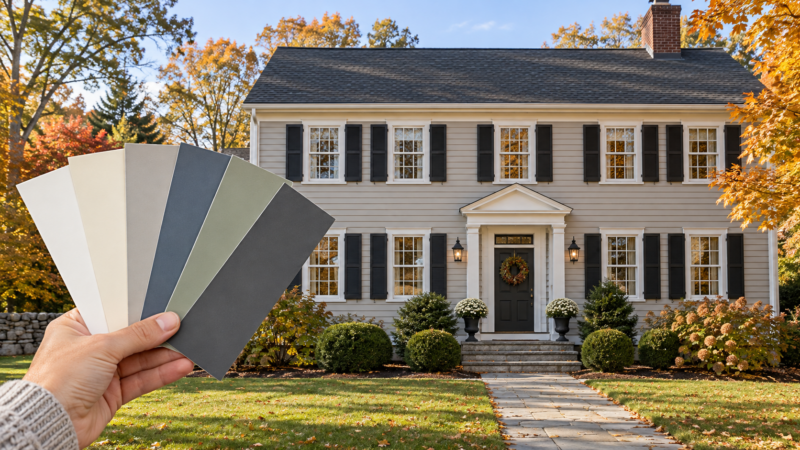
The best siding color for a New England Colonial is one that works with the home’s roof, windows, trim, and proportions. A symmetrical facade can look especially inviting when the palette gives the front entrance a clear focal point and keeps the other details coordinated.
White, warm gray, muted blue, soft green, and cream are useful starting points. These are design suggestions rather than a claim that one color is best for every Colonial. Before choosing, compare samples against the materials that will remain on your home. Pine & Harbor installs siding on old colonial homes with all the variety a homeowner could ask for. Read below to see some of our recommendations.
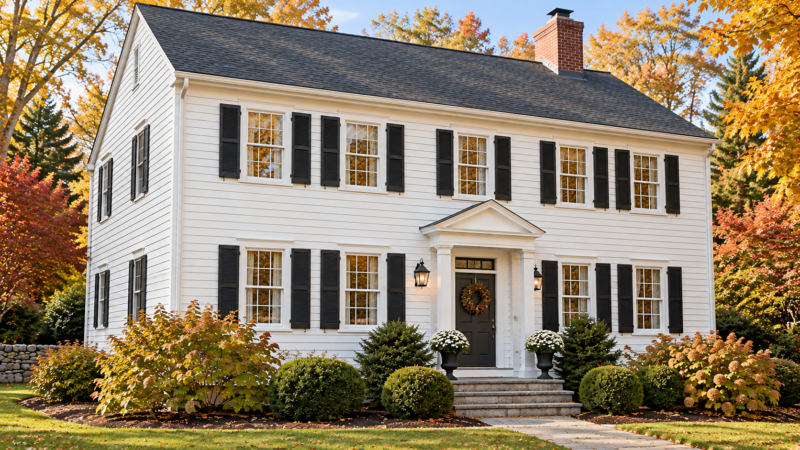
White and Off-White for a Crisp Colonial Exterior
White siding paired with dark shutters is a familiar Colonial combination. It emphasizes the rhythm of evenly spaced windows and lets an entry door provide the accent color.
Choose the undertone carefully. A bright white can feel sharp beside cool gray roofing, while an off-white may blend more comfortably with warm brick or stone. Compare the siding and trim together so two similar whites do not look unintentionally mismatched.
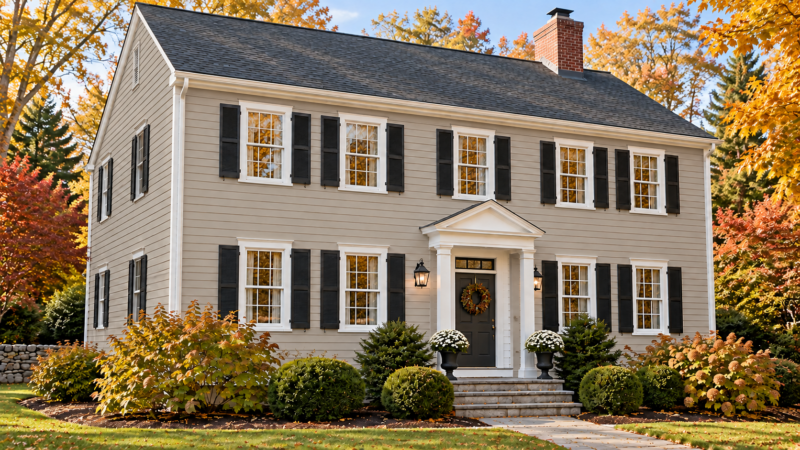
Warm Gray and Greige for a Softer Neutral Palette
Warm gray and greige are good starting points when a home has beige masonry, weathered stone, or brown roof tones. White or cream trim can define the windows without making the exterior feel overly busy.
Look at large samples outdoors. A gray that appears neutral on a screen can show blue, green, or violet undertones next to the existing roof.
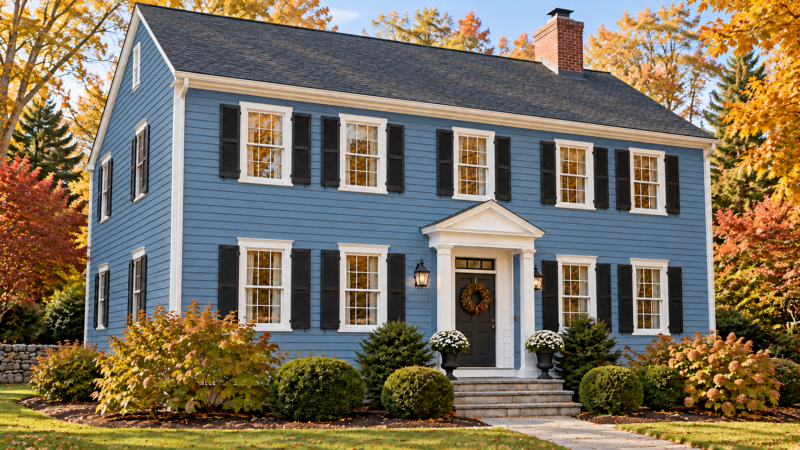
Muted Blue for a Coastal New England Feel
Blue-gray siding with light trim can give a Colonial a coastal character while preserving its traditional lines. A deeper blue makes a stronger statement, particularly when the window trim and entrance details are simple.
Try muted blue with charcoal roofing, white trim, and a natural wood-style door. Keep the shutter color coordinated with the door and roof rather than adding several competing accents.
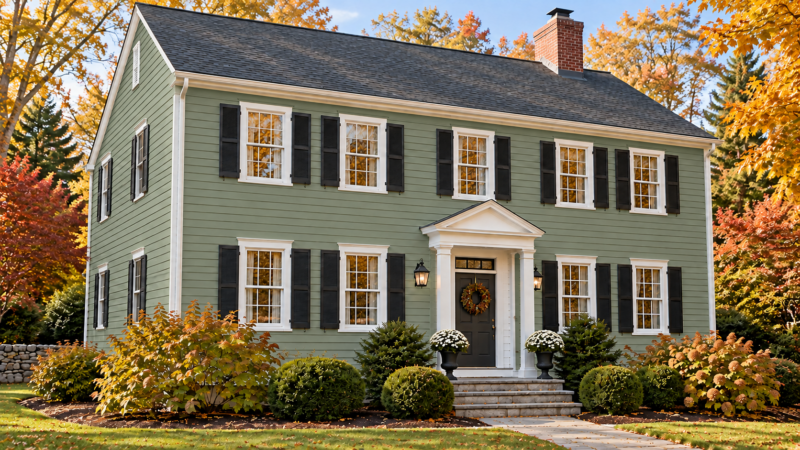
Sage and Muted Green for a Wooded Setting
Sage, gray-green, and restrained olive tones can work well with wooded surroundings. They provide an alternative to gray without requiring a bright exterior palette.
Pair softer greens with warm white trim and compare them against the roof’s undertone. A green that looks balanced in direct sunlight may feel much darker on a shaded north-facing wall.
Cream and Soft Yellow for a Warmer Exterior
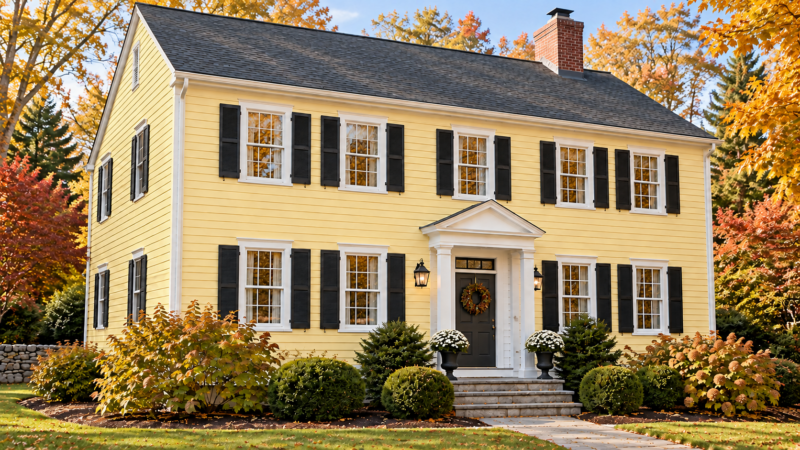
Cream and pale yellow can create a welcoming palette with dark shutters and warm roof tones. A restrained yellow is easier to coordinate than a saturated color when the home already includes brick, stone, or prominent landscaping.
Use these colors as a design direction, not proof of historical accuracy. If an authentic restoration is your goal, investigate the building’s original finishes and any applicable local review requirements before selecting replacement siding.
Choose the Material Alongside the Color
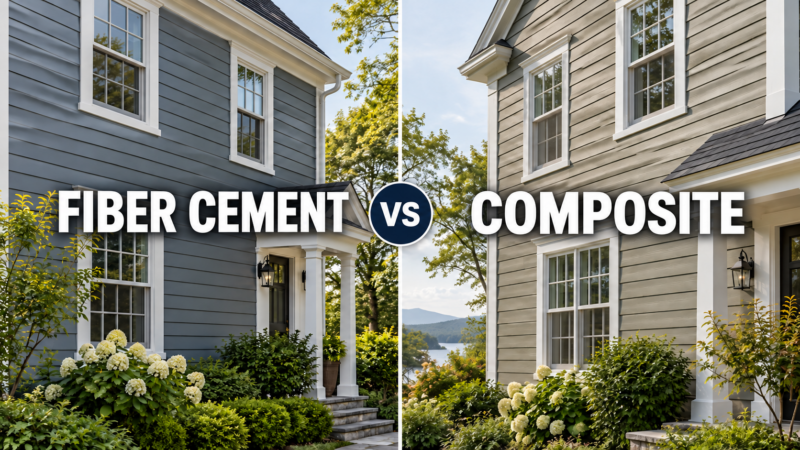
A color that looks right in one manufacturer’s sample may look different on another product’s texture and finish. Compare color and profile together. We suggest looking into an engineered wood for those looking for authentic wood or a composite siding for homeowners looking for the look and feel of wood with the durability of modern materials. Below is a list of our recommendations.
- James Hardie: Explore its Colonial design guidance and color planning resources for fiber cement options.
- CertainTeed: Monogram vinyl siding provides another route to a traditional exterior. Confirm the specific profile and color available for your project.
- LP SmartSide and Everlast: Compare engineered wood and mineral composite samples through Pine & Harbor’s composite siding options.
Pine & Harbor installs all of the above products for homeowners in New Hampshire and Massachusetts. Did any of the above siding options catch your eye? Feel free to reach out to us to get deeper insights about the product and installation process. We are happy to chat. You can also call us at 603-475-8137.
How to Narrow Down Your Siding Color
- Start with fixed materials. Your roof, brick, stone, and window frames already establish part of your home’s color palette. Choosing siding that complements their undertones helps the exterior feel cohesive. For example, warm brick and brown roofing may pair naturally with cream or greige, while cool gray roofing can work well with muted blue or cooler neutrals.
- Select the main siding color. Siding covers most of the exterior, so its color should guide your trim, shutters, and entry door choices. Once you select it, use trim to define architectural details and accents to draw attention to the entrance. Choosing these colors together helps prevent competing undertones or contrasts that make the facade feel busy.
- Check physical samples outside. Natural light changes how a color appears throughout the day. A gray may reveal blue undertones in shade, while a cream can look more yellow in direct sunlight. View samples beside your existing roof, masonry, and trim on several sides of the house to see how they work in the conditions where they’ll actually be installed.
- Compare texture and exposure. Texture and board width change how light and shadow fall across the siding. Smooth finishes tend to look cleaner and more uniform, while wood-grain textures add visual depth. Compare the color in your intended profile so you’re judging the complete appearance.
Plan Your Colonial Home’s Exterior with Pine & Harbor
A successful siding update brings the material, color, and installation details together. Contact Pine & Harbor for a free siding estimate and discuss the options for your New England home.